
If you feel like the internet is getting a little crowded, you’re not alone. For years, we have lived with limited options like .com or .net. However, all of that is about to change very soon. The ICANN 2026 Round is officially on the horizon, marking the first time since 2012 that organizations can apply for their very own custom domain extensions.
Whether you lead a global brand or a local community, this “once-in-a-decade” opportunity lets you grab a piece of digital history. But what does this actually mean for your digital strategy? Let’s break it down in plain English.
What is the ICANN 2026 Round?
Think of ICANN as the “phone book” manager for the entire world wide web. Every few years, they open a window where people can propose new generic Top-Level Domains (gTLDs). As a result, we now use extensions like .app, .shop, or even branded ones like .google.
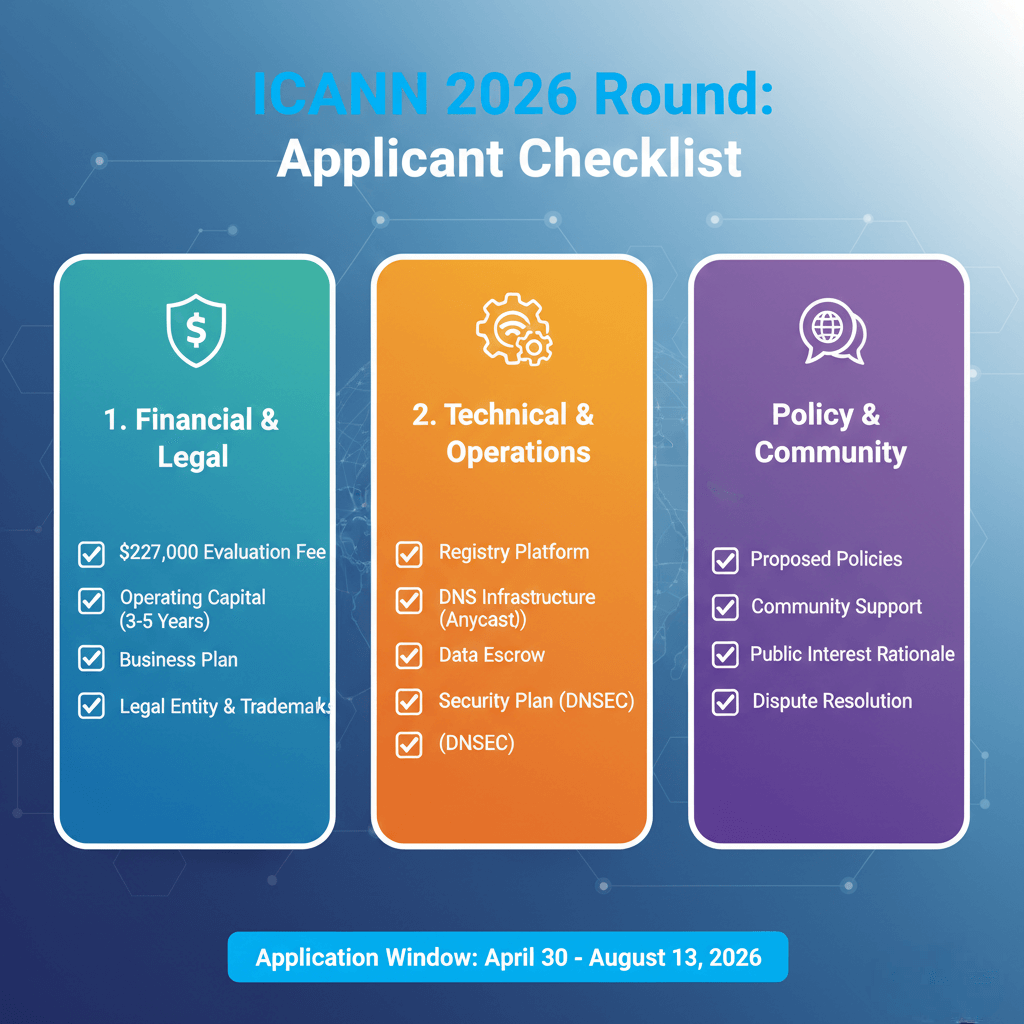
The ICANN 2026 Round is special because ICANN will open the application window on April 30, 2026. This gives you a brief 105-day period to submit your vision for a custom “dot-anything.” You can track the official timeline on the official ICANN website to stay updated.
Why Brands are Racing to the ICANN 2026 Round
Interestingly, companies no longer just look for a “cool” name. In this round, savvy brands view a “DotBrand” extension as a massive security upgrade. Imagine a world where your customers feel safe because they know only your company can own a domain ending in .yourbrand.
Furthermore, the ICANN 2026 Round introduced some new rules to make the process fairer. For example:
- No “Closed Generics”: Applicants cannot buy a word like .pizza and keep it for exclusive use; it must serve the wider public.
- Replacement Strings: If two people want the same name, you can now provide a “fallback” name to avoid expensive bidding wars.
The Human Side of Internet Names
It is easy to get lost in technical jargon, but the ICANN 2026 Round is really about identity. I recently read about a small linguistic community that missed the 2012 window. For them, securing an extension in 2026 isn’t about making a profit—it’s about ensuring their language has a permanent, recognizable home on the web.
Similarly, many non-profits see this round as a way to build immediate trust. If you missed our previous deep dive into digital assets, check out our blog post on the AI.com sale for more context on domain values.
Costs for the ICANN 2026 Round
Let’s be real: this process costs significantly more than a standard $10 domain registration. ICANN sets the evaluation fee for the ICANN 2026 Round at roughly **$227,000**. Consequently, this move serves established entities rather than hobbyists. You are essentially applying to run a mini-internet registry, which requires a solid technical foundation.
Final Thoughts
The ICANN 2026 Round represents the next great land grab of the digital age. This is our chance to build a web that is more organized, secure, and personal. If you plan to apply, start gathering your paperwork now—don’t wait until the window opens in April!
What “dot-name” would you pick for your project? I’d love to hear your creative ideas in the comments below!
Last modified: February 18, 2026