
Let’s talk about that sinking feeling. You’re a brand, maybe you let a crucial domain name expire—say, <ideatec.com>—and a professional domain investor snaps it up the second it drops. Naturally, you file a UDRP complaint, assuming the transfer is a formality. After all, it’s your brand name, right?
Well, the recent Ideatec S.A. v. Mira Holdings decision (WIPO Case No. D2025-2648) throws a big yellow flag on that assumption. This Ideatec UDRP Case is a powerful reminder that the UDRP isn’t a “Plan B” purchasing mechanism; it’s an anti-cybersquatting tool. And in this instance, the UDRP panel essentially said: “The investor is clean.”
Case Timeline and Metrics
| Metric | Detail |
| Case ID | WIPO Case No. D2025-2648 |
| Complaint Filed | July 7, 2025 |
| Decision Date | September 29, 2025 |
| Disputed Domain | <ideatec.com> |
| Resolution | Complaint Denied |
Ideatec UDRP Case Analysis: Trademark vs. Generic Term
The core of the Ideatec UDRP Case lies in the debate over the name’s nature. Ideatec S.A. argued the term was coined and distinctive. However, the domain investor, Mira Holdings, successfully countered with compelling evidence:
- Generic/Descriptive Value: They argued that “ideatec” combines common, descriptive business components (“idea” and “tech”). Therefore, the domain was inherently commercially attractive to any investor, not just to target the Complainant.
- Legitimate Business Model: The Respondent proved they are a professional domain investor with a large portfolio of generic, two-word domain names. They acquired
<ideatec.com>at a public auction as part of this legitimate business strategy. - No Specific Targeting: Finally, the investor showed they did not have specific knowledge of Ideatec S.A. when they registered the domain. The domain only resolved to a generic “for sale” landing page.
The Panel’s Verdict: Protecting Legitimate Commerce
The Panel ultimately ruled that the Complainant failed to prove the third essential UDRP element: bad faith registration and use.
This ruling is a crucial teaching moment: It is not bad faith for an investor to acquire a domain name composed of generic or descriptive words, even if those words make up someone’s trademark. This applies provided the investor’s intent is to resell it generally, not specifically to exploit the Complainant. Moreover, a high asking price—consistent with the market value of similar generic domains—does not, by itself, establish bad faith.
What Does This Mean for Your Brand?
The Ideatec UDRP Case highlights three critical takeaways:
- Renewals are Non-Negotiable: If your domain name is valuable, never let it lapse. The domain investment community is fast and sophisticated. For tips on domain management, check our recent post on Domain Name Lifecycle.
- Distinctiveness Matters: If your mark is generic or descriptive, your UDRP case will face a much higher hurdle against a legitimate domain investor.
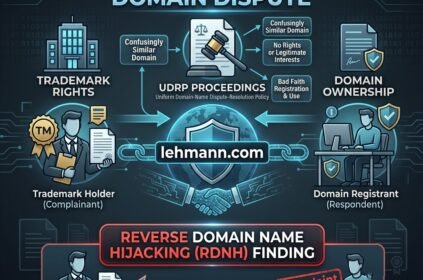
- UDRP is Not a Price Negotiator: If commercial negotiations fail, attempting to use the UDRP is risky. It can even lead to a finding of Reverse Domain Name Hijacking (RDNH). You can read more about RDNH on the WIPO official UDRP site.
The UDRP is there to stop cybersquatting bandits, not to settle fair commercial disputes over expired assets. The domain investor won because they proved their intent was commerce, not extortion. Case closed.
Last modified: December 11, 2025